
ERX-208 Disrupts DNA Repair
San Antonio, TX – October 12, 2026
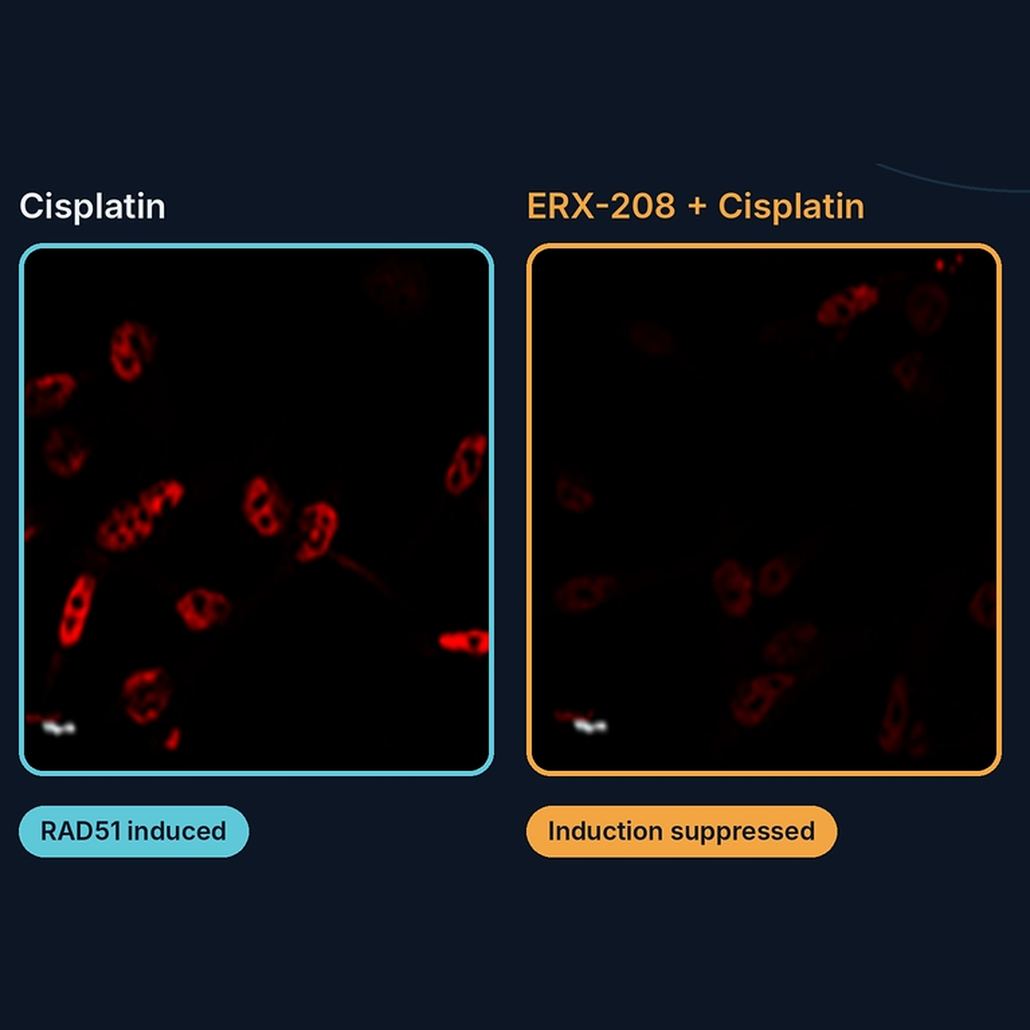
We are pleased to share our new paper in Cancer Research Communications, showing that ERX-208, Etira’s LIPA-targeting compound, disrupts DNA repair in ovarian cancer cells by inducing sustained endoplasmic reticulum (ER) stress.
Cancers with homologous recombination deficiency (HRD), such as those carrying BRCA mutations, are particularly sensitive to DNA-damaging chemotherapy and PARP inhibitors. However, most cancers retain functional DNA repair mechanisms, limiting the benefit of these therapies. Our new study demonstrates that ERX-208 can pharmacologically induce functional HRD, creating a DNA repair vulnerability in cancer cells that would otherwise be capable of repairing DNA damage.
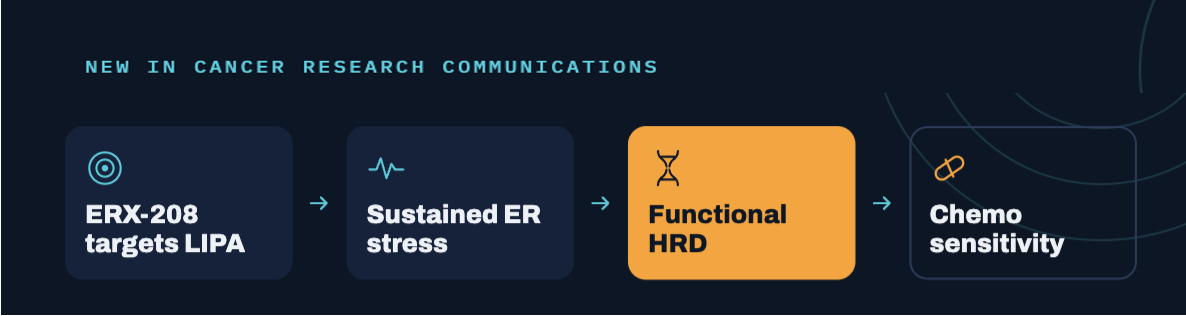
The work, led by Etira founders Drs. Ratna Vadlamudi, Ganesh Raj, and Jung-Mo Ahn, began with an unbiased drug screen in ovarian cancer. Subsequent experiments revealed that ERX-208-induced ER stress suppresses key DNA repair pathways, including homologous recombination, and sensitizes cancer cells to DNA-damaging chemotherapy. These findings suggest a new therapeutic strategy: rather than relying on tumors to have preexisting DNA repair defects, we may be able to create those vulnerabilities with a drug.
The results also provide a rationale for combining ERX-315, Etira’s related LIPA-targeting agent currently in Phase 1 clinical trials in Australia (NCT06533332), with PARP inhibitors or chemotherapy. “Inducing HRD with a drug could fundamentally change how we approach DNA repair-targeted cancer therapies,” said Dr. Ganesh Raj, Founder and Chief Medical Officer of Etira. “Our goal is to explore whether we can extend the benefits of these established treatments to patients whose cancers would otherwise be resistant.”
Read our paper in Cancer Research Communications here.
ERX-208 and ERX-315 are investigational compounds. The findings are preclinical, and clinical safety and efficacy have not been established.